
Description
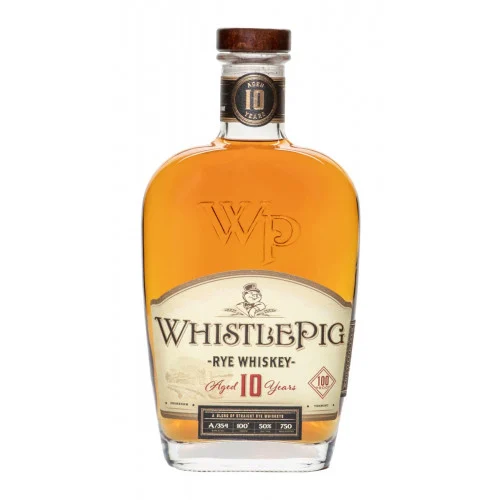
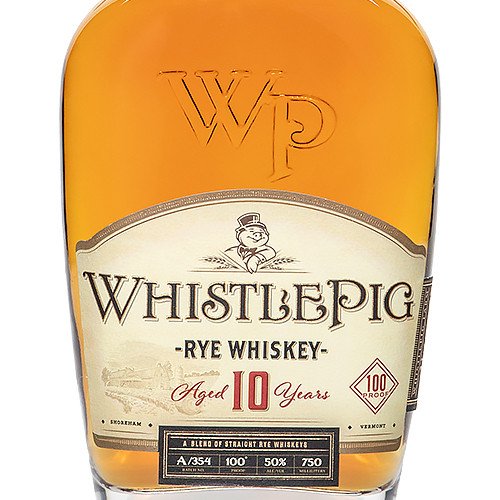
About WhistlePig 10 Year Old Straight Rye Whiskey
Key Specs & Background
| Feature | Detail |
|---|---|
| Proof / ABV | 100 proof = 50% ABV |
| Mashbill / Grain | 100% rye (unmalted rye) |
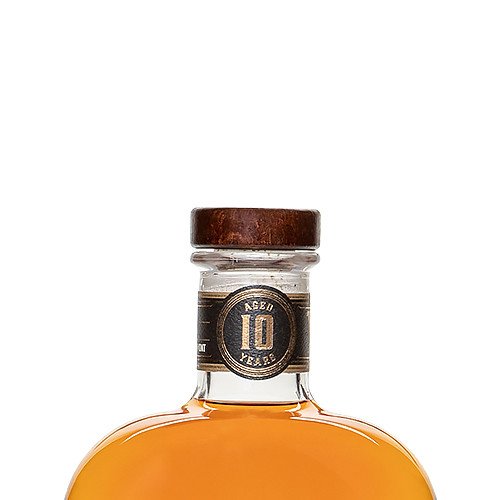
| Age | 10 years aged |
| Origin / Sourcing | The whiskey was originally distilled in Canada (Alberta) and aged there, but further aged / finished and bottled at the WhistlePig Farm in Vermont. |
| Barrel & Maturation | Aged in new American oak barrels. There’s aging across two jurisdictions (Canada + Vermont) before bottling. |
Tasting Notes & Flavor Profile
Here’s what people commonly pick up in this whiskey:
| Aspect | Flavors & Aromas |
|---|---|
| Nose / Aroma | Vanilla, caramel, butterscotch; also rye spice (clove, nutmeg, allspice), orange peel; hints of oak, mild herbal and sweet notes. |
| Palate | Spicy rye (pepper, baking spice), more vanilla and caramel, sweet oak, sometimes mint or herbal tones, a touch of citrus (orange peel) and possibly dark chocolate in some tastings. |
| Finish | Long, warm, lingering with spices, oak, caramel / butterscotch, maybe fruit (e.g. sour cherries) or dark / toasted wood. |
What Makes It Stand Out
-
The “100/100” name comes from its being a 100 proof, 100% rye, aged 10 years — hitting what its makers consider a “sweet spot” among proof, age, and purity.
-
It helped raise the bar in the rye whiskey world when it debuted; it’s often cited as a benchmark for what a well‑aged, full‑proof rye can do.
-
Because of its age, it develops substantial oak and maturation character — more than younger ryes, which sometimes tend to be sharper or more one‑dimensional.
Pros & Cons
Pros:
-
Rich, mature flavor: The aging brings out complexity — oak, vanilla, sweet and spicy notes that are well‐integrated.
-
Powerful but balanced: At 100 proof it has a punch, but many find it more approachable than some higher proof, young ryes because the age helps smooth and off‑set the raw rye intensity.
-
Great for sipping neat or with a drop of water; also works well in cocktails that benefit from rye’s spice (e.g. Manhattan, Old Fashioned) where you want more character.
Cons:
-
Price tends to be high; may be more expensive than simpler rye whiskies.
-
Because of its oak influence, some drinkers who prefer very fresh, grain‑forward or aggressively spicy rye may find it a bit too woody, or less “rye‑raw.”
-
The sourcing (initial distillation in Canada) is sometimes a point of criticism among purists who look for fully estate or fully in one place production.
Good Uses & Serving Suggestions
-
Neat: Especially good neat with maybe a small splash of water to open up aromatic complexity.
-
On the rocks: A large ice cube will mellow it and release more of the aging character.
-
Cocktails: Strong rye cocktails; works well in classic rye cocktails like a Rye Manhattan, Old Fashioned, or Sazerac‑style drinks. Because it’s flavorful on its own, it can carry the drink well without being drowned out.
-
Pairings: Fatty meats (pork, duck), smoked or grilled foods; dark chocolate; cheeses with more depth (aged gouda, cheddar); desserts with caramel or spice.



Reviews
There are no reviews yet.